 Skip to content


Hail hits the Houston area about seven days a year, and hail of an inch or bigger about six, based on our count of NOAA storm records for Harris, Fort Bend, Brazoria, Galveston and Montgomery counties from 2016 through 2025. Most of it falls from March through June. Any one roof gets hit far less often. Here’s what the records show, year by year and county by county, and what they mean for your roof.
Quick answer
- From 2016 through 2025, NOAA logged 227 hail reports on 69 different days across five Houston-area counties.
- Three of every four reports came in March, April or May. May alone had 71.
- Golf-ball hail (1.75 inches or more) showed up on 19 of those days, about twice a year somewhere in the region.
- Houston gets less hail than Dallas-Fort Worth, but the area has logged stones up to 2.75 inches.
- The busiest years were 2024 and 2023. A quiet year like 2022 tells you nothing about the next one.
How often does it hail in Houston?
We pulled every hail record for the five counties from NOAA’s Storm Events Database, using its public yearly data files, and counted them ourselves. A “report” is one record of hail at one place and time, so a single storm can produce a dozen. A “hail day” is any date with at least one report in the five counties.
That second number is the one to watch. Reports jump around depending on how many people saw the storm and sent it in. Hail days give you a steadier picture.
| Year | Hail reports | Hail days | Largest report |
|---|---|---|---|
| 2016 | 30 | 9 | 2.5 in. |
| 2017 | 11 | 7 | 1.75 in. |
| 2018 | 6 | 3 | 1 in. |
| 2019 | 26 | 7 | 2.5 in. |
| 2020 | 29 | 6 | 1.75 in. |
| 2021 | 20 | 5 | 1.5 in. |
| 2022 | 2 | 2 | 1 in. |
| 2023 | 38 | 12 | 2 in. |
| 2024 | 52 | 14 | 2.75 in. |
| 2025 | 13 | 4 | 1.75 in. |
| 2026 (through July) | 16 | 4 | 1.5 in. |
Our count of NOAA Storm Events records for Harris, Fort Bend, Brazoria, Galveston and Montgomery counties. The newest NOAA file ran through July 2026 when we checked on November 1, 2026.
The swing from year to year is the real story. The area went from 2 hail days in 2022 to 12 in 2023 and 14 in 2024. If your roof came through a quiet stretch, that was luck, not a sign the risk went away.
When is hail season in Houston?
Spring. Of the 227 reports from 2016 through 2025, 170 came in March, April or May, and June added another 29. Here’s the full split:
| Months | Hail reports | Share |
|---|---|---|
| March | 44 | 19% |
| April | 55 | 24% |
| May | 71 | 31% |
| June | 29 | 13% |
| December through February | 21 | 9% |
| July through November | 7 | 3% |
Off-season hail does happen, though. NOAA has a 2.5-inch report at Bellaire on January 8, 2016, a 1.5-inch report at Cypress on December 24, 2024, and a 1.75-inch report in Harris County on August 18, 2025. Not one report in the ten years fell in October or November.
Which Houston-area county gets the most hail?
Harris County, by a wide margin. Part of that is size and population: more people means more eyes on a storm and more reports going in. The hail-day column shows it’s closer than the report count suggests. Montgomery County has about a fifth as many reports as Harris, but more than a third as many hail days.
| County | Hail reports | Hail days | Largest report |
|---|---|---|---|
| Harris | 143 | 46 | 2.5 in. |
| Montgomery | 26 | 17 | 1.75 in. |
| Fort Bend | 24 | 8 | 2.75 in. |
| Galveston | 18 | 11 | 2.75 in. |
| Brazoria | 16 | 10 | 1.75 in. |
| Dallas (for comparison) | 196 | 64 | 4 in. |
| Tarrant (for comparison) | 465 | 87 | 5 in. |
So Houston does get less hail than North Texas, and the biggest stones are smaller. That doesn’t make it low risk for a roof. The National Weather Service’s Houston/Galveston office says hail bigger than baseballs is rare in southeast Texas, but it also lists a 4.5-inch report at Hitchcock in Galveston County on April 2, 2013. That storm falls before our ten-year window.
The biggest recent hail storms in the Houston area
These are the dates that stand out in the records. If you owned your home on one of them and never had the roof checked, it’s worth knowing about.
- May 9, 2019: 15 reports, the most of any day in the ten years, with 2.5-inch hail around Katy.
- June 23, 2023: 13 reports, several of them 2 inches, across Harris County.
- March 15 and 16, 2024: 16 reports over two days, peaking at 2.75 inches near Needville in Fort Bend County.
- May 31, 2024: 2.75 inches at Dickinson and 2 inches at League City in Galveston County.
- April 30, 2026: 10 reports in a little over half an hour that night, from the Sugar Land area to Pearland, up to 1.5 inches.
That April 2026 storm shows how hail really works. It tracked across a band of neighborhoods and left the rest of the metro alone. A “hail day” for Houston doesn’t mean hail on your street.
Example: what those numbers could mean for one roof
- The five counties had 19 golf-ball hail days in 10 years, or about 1.9 a year.
- Over 15 years at that same pace, that’s about 28 days somewhere in the region.
- Most of those storms would miss any one house. Hail falls in narrow bands.
- Still, a roof that stays in place for 15 years has plenty of chances to catch one, plus many more small storms. This is simple math from past records, not a forecast.
What size hail hurts a Houston roof?
Most Houston hail is big enough to matter. Of the 227 reports, 186 were 1 inch or larger, which is the size the National Weather Service calls severe. The single most common size was 1 inch, a quarter on the NWS hail size chart, with 95 reports. Another 47 reports were golf-ball size (1.75 inches) or larger.
Small hail still counts. A 2025 study by the Insurance Institute for Business and Home Safety fired small ice balls at shingles, sizes of 0.7 and 1 inch. They didn’t leave dents or tears, but the shingles lost granules, and weathered shingles hit by small hail were about ten times more likely to be damaged by a later severe storm. In a metro where most of the hail sits right around that 1-inch line, repeat small storms add up.
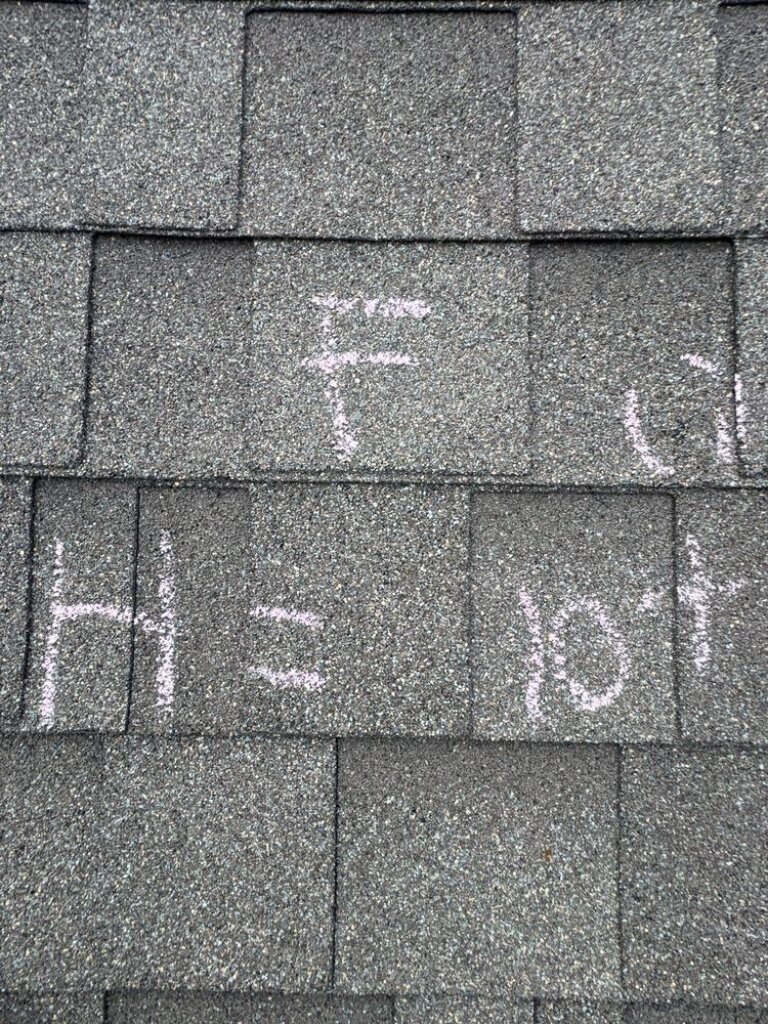
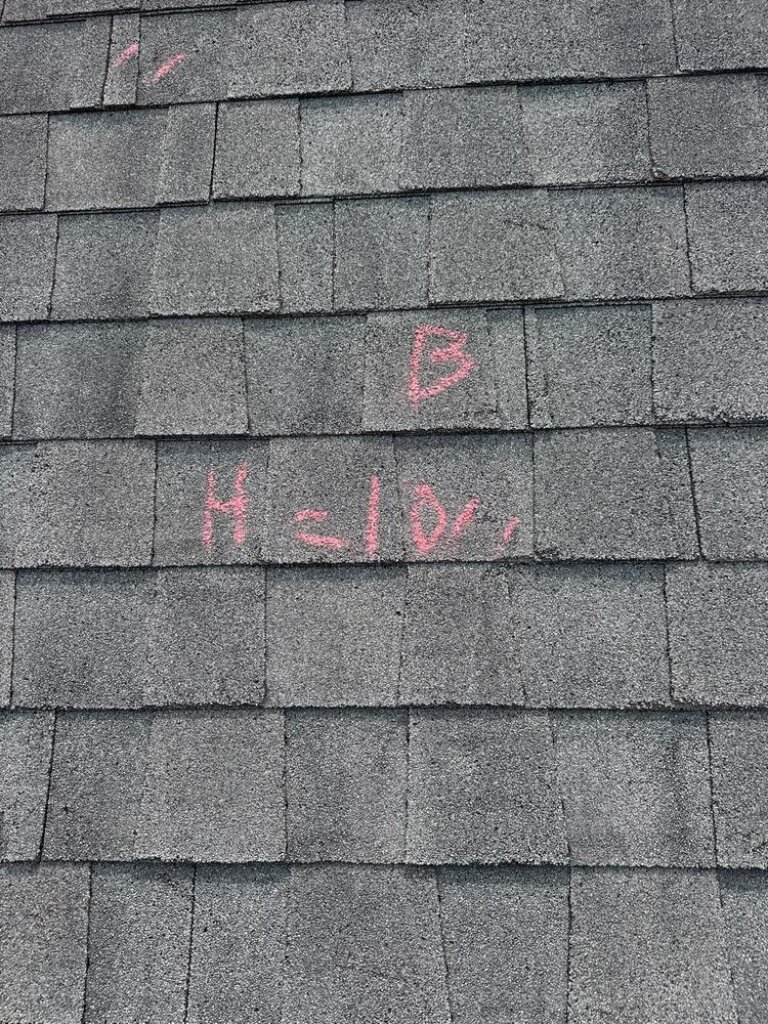
For what those hits look like up close, see our photo guide to roof hail damage in Texas.
How to check if it hailed at your house
The date matters, since your insurer will ask for it first. Here’s how to pin it down.
- Look at your own property first. Dented gutters, vents and AC fins, plus granules at the downspouts, tell you more than any map.
- Write down the date and the size you saw, or ask neighbors. Take a photo of a stone next to a coin if you can do it safely.
- Search NOAA’s Storm Events Database. Pick Texas, then your county, then the date range. Expect a lag: when we checked in November, the newest records ran through July.
- Remember a blank result proves nothing. NOAA only lists hail someone reported. No record for your block doesn’t mean no hail fell there.
- Send in what you see. The Houston/Galveston weather office takes severe weather reports from the public.
- Stay off the roof. Wet shingles are slick. If the ground signs add up, have the roof looked at.
What we’ve seen on Pearland hail roofs
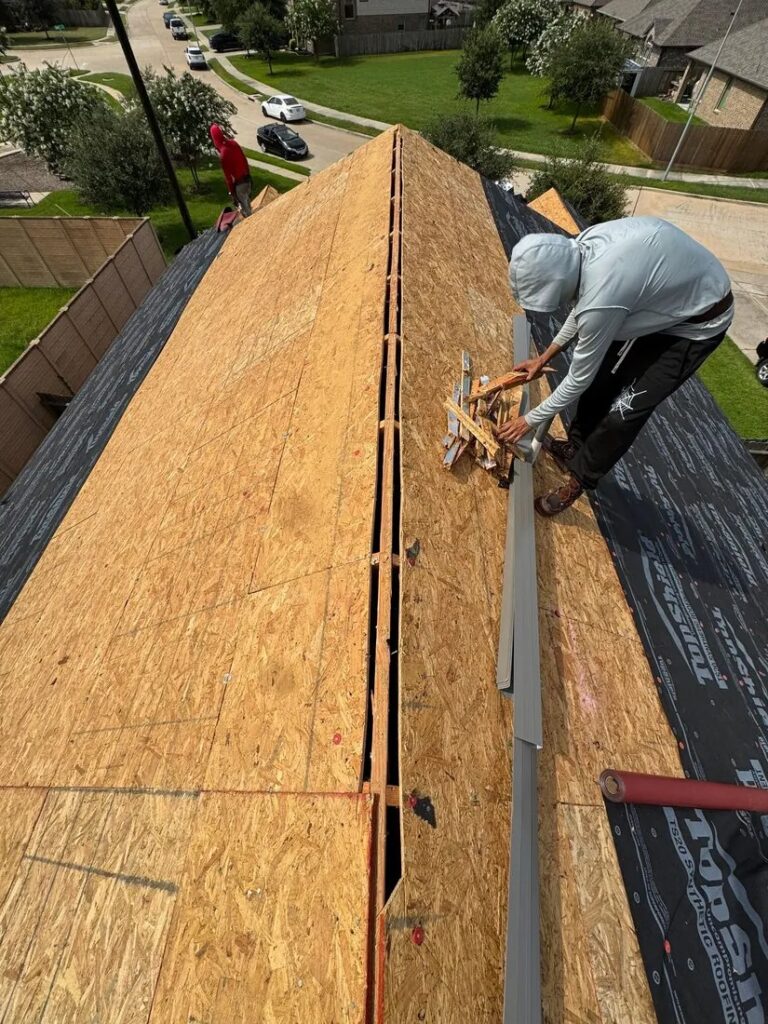
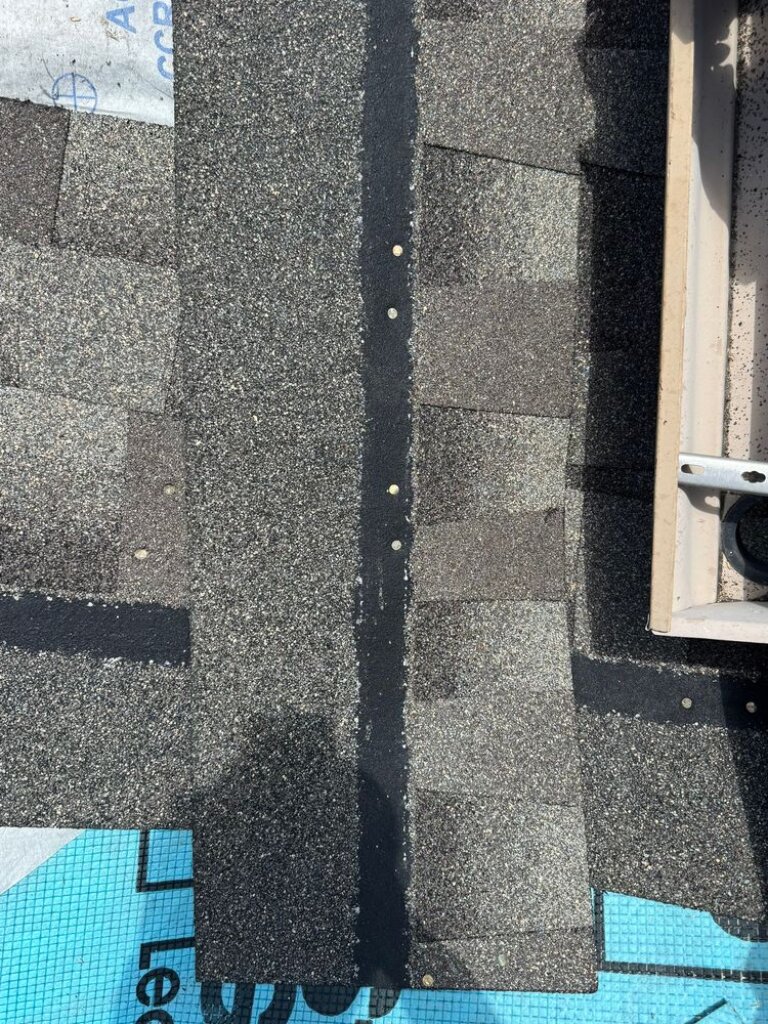
Pearland sits in the middle of this data. NOAA lists hail reports there in 2016, 2022 and 2026, including 1.5 inches in May 2016 and 1.25 inches on April 30, 2026. Four of the projects on our site are hail roofs in Pearland, and each one was documented before any work began.
On one single-story home, hail bruising was marked across the shingle field and the roof went down to bare deck. The deck was re-nailed before TopShield underlayment and GAF Timberline HDZ shingles went on. On a large custom home, a test square was marked for the adjuster, and the new roof got GAF StormGuard leak barrier and Timberline HD shingles.
Not every hail storm means a new roof. When the damage is limited, a roof repair is the honest answer, and we’ll tell you so.
What to do after the next Houston hail storm
The Texas Department of Insurance tells homeowners to file a claim quickly, take photos or video, cover holes, and keep receipts for temporary repairs. Hail coverage comes with the wind and hail protection on a homeowners policy, so check that yours has it, and look up your deductible before you decide anything.
From there, our guide to the roof insurance claim process in Texas walks through each step, and our roof replacement cost guide helps if you end up paying yourself. For a look at the roof, our storm damage team gives same-day estimates for storm damage.
General information, not insurance advice. Check your own policy for your coverage and deadlines.
Frequently asked questions
How often does it hail in Houston?
Somewhere in the five-county area, about seven days a year on average from 2016 through 2025, based on NOAA records. Harris County alone averaged between four and five. The range is wide, from 2 hail days in 2022 to 14 in 2024. Your own street sees hail far less often, since storms drop it in narrow bands.
When was the last hail storm in Houston?
The newest NOAA file we checked ran through July 2026, and its latest Harris County hail reports were from June 2, 2026, at 1 inch. NOAA’s records lag by months, so a newer storm may not be listed yet. For a recent storm, check local reports and your own property.
Does Houston get big hail?
Sometimes. NOAA logged 47 reports of 1.75 inches or larger across the five counties in ten years, on 19 different days. The largest were 2.75 inches, at Dickinson and near Needville in 2024. The National Weather Service says hail bigger than baseballs is rare in southeast Texas, though it has happened.
Is there a hail map for Houston?
NOAA’s Storm Events Database lets you search reports by county and date, and each report lists a nearby place. It isn’t a true street-level map, and it only shows hail someone reported. Private hail-map services exist, but a roof inspection tells you what actually happened to your house.
How do I know if hail damaged my roof?
Start on the ground. Look for dents on gutters, vents and AC fins, and for granules at the downspouts. Most hail hits on shingles are too small to see from the yard, so if those signs show up, have someone check the slopes up close. Our inspections are free and documented with photos.
Had hail at your house?
We’ll inspect the roof and attic for free, photograph what we find, and tell you straight whether it needs a repair, a replacement or nothing at all. If a claim makes sense, we’ll meet your adjuster on site. We’re Houston-based and open Monday through Friday, 8 AM to 6 PM.
Sources
- NOAA National Centers for Environmental Information: Storm Events Database
- NOAA NCEI: Storm Events yearly data files, 2016 to 2026 (our count)
- National Weather Service Houston/Galveston: Thunderstorm safety and hail
- National Weather Service Houston/Galveston: Report severe weather
- National Weather Service: Severe thunderstorm reference table (hail)
- National Weather Service: Hail size chart
- IBHS, Frontiers in Materials (2025): Sub-severe hail and asphalt shingle risk
- Texas Department of Insurance: Hail damage tips to file an insurance claim


