 Skip to content


If your insurer denied your roof claim in Texas, start with the written reason. Texas law requires the company to state why it rejected the claim, and that reason decides your next move: a second look, appraisal, a complaint to the Texas Department of Insurance (TDI), or a lawyer. This post covers the common roof denial reasons, the evidence that answers each one, and the deadlines that still run.
Quick answer
- A denial isn’t always final. TDI says you can explain why you disagree and send documents, such as a contractor’s estimate.
- Your insurer must give its reasons in writing and tie them to your policy and the facts.
- Appraisal settles the amount of a loss, not whether the policy covers it.
- A TDI complaint is free, but TDI can’t settle a storm vs. wear-and-tear argument.
- Before a weather-claim lawsuit, Texas generally requires written notice at least 61 days ahead.
What should you do first if your roof claim is denied?
Before you pay anyone or sign anything new, spend an hour on these steps. They cost nothing, and every option later in this post depends on them.
- Get the reason in writing. TDI says the company must give you its reason in writing. Under Insurance Code 542.056, a rejection notice has to state the reasons.
- Read the words it used. “Wear and tear,” “below deductible” and “cosmetic” are different problems with different answers. The table below sorts them.
- Pull your full policy. You need the declarations page and every endorsement, not just the summary. Look for the wind and hail deductible, any roof endorsement, and the “suit against us” section.
- Get the adjuster’s estimate and photos. Ask for the full estimate, including what was left out and why.
- Put the storm date on paper. Save storm alerts, dated photos, repair receipts and your call log.
- Protect the roof. Keep tarps and temporary repairs going, and keep the receipts. Don’t let a known leak sit while the dispute runs.
Why do insurance companies deny roof claims in Texas?
TDI says the most common reason is simple: the policy doesn’t cover the damage. For roofs, that usually shows up as one of the reasons below.
| What the letter says | What it means | What answers it |
|---|---|---|
| Wear and tear, age, or deterioration | The insurer says the damage built up over time. TDI lists worn roofs as something companies won’t pay for. | Close-up photos of fresh hits, storm-date records, and matching dents on gutters, vents and screens |
| Damage is below your deductible | The repair estimate is smaller than your deductible, so nothing is owed. TDI’s example is a $5,000 repair on a $10,000 deductible. | A line-by-line estimate that shows anything the adjuster’s scope missed |
| Cosmetic damage | The hail changed how the roof looks, not how it works. This applies only if your policy has that exclusion. | The exclusion’s exact wording, plus evidence of water entry or a damaged roof covering |
| Late notice | The insurer says you reported too long after the storm. Deadlines vary. TDI notes some policies use one year. | Your policy’s actual deadline and proof of when you found the damage |
| Not covered peril | Flood, for example, needs its own policy. On the coast, wind and hail may need a separate policy too. | Your declarations page, and any Texas Windstorm Insurance Association (TWIA) policy you hold |
Wear and tear vs. storm damage
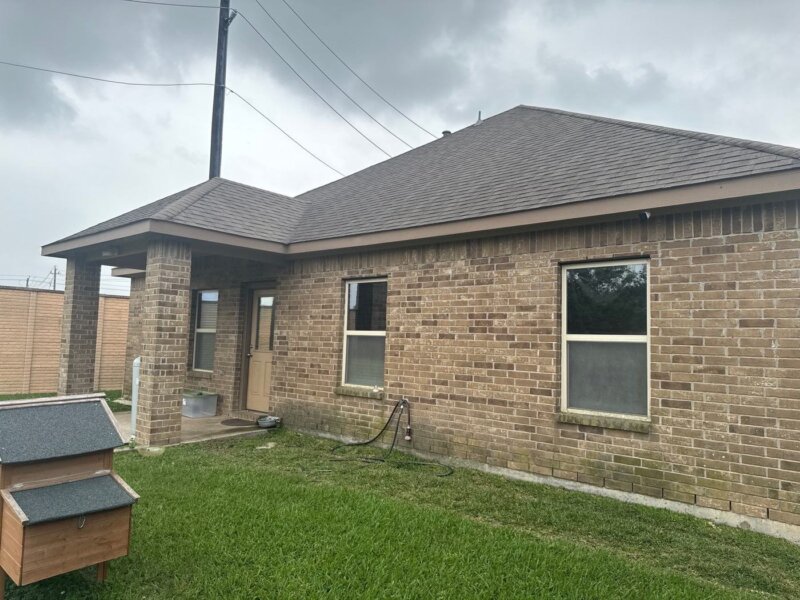
This is the fight most homeowners with older roofs end up in. An old roof can still have new hail damage, and age alone doesn’t prove the hail didn’t happen. What matters is whether the evidence ties specific damage to a specific storm. Our guide to spotting roof hail damage in Texas shows what real hits look like next to blisters and scuffs.
What does cosmetic damage mean on a Texas policy?
A cosmetic exclusion isn’t in every policy, so check before you accept that reason. TDI’s Homeowners form HO-145 defines cosmetic damage as changes to how the roof covering looks that don’t let water in or stop it from keeping out the elements. That older form was tied to a credit for an impact-resistant roof.
Your policy’s wording controls, not that form. TDI’s 2026 note on roof discounts warns that this coverage can change at renewal, when companies can add exclusions. If you bought a Class 4 roof for the discount, read this endorsement closely.
Texas rules your insurer has to follow
You aren’t arguing from a blank page. These rules apply to the denial itself, whatever the reason.
- Timing: The insurer must accept or reject in writing within 15 business days after it has everything it asked for. If it can’t, it must tell you why and decide within 45 days of that notice.
- Explanation: Insurance Code 541.060 makes it an unfair practice to fail to promptly give a reasonable explanation that ties the denial to the policy and the facts or law.
- Investigation: The same section bars refusing to pay a claim without a reasonable investigation.
Example: how the clock works (made-up dates)
- Your insurer receives the last item it asked for on Monday, September 14, 2026.
- Fifteen business days later is Monday, October 5. It must accept or reject by then.
- If it says on October 5 that it needs more time and explains why, it has until November 19.
- A declared weather catastrophe adds 15 days.
For the full timeline from first report to final check, see the roof insurance claim process in Texas.
How do you fight a denied roof claim in Texas?
TDI’s advice on disagreeing with your insurer starts with the company itself: tell it why, and send documents. A second look costs nothing and sometimes settles the matter.
Ask for a re-inspection in writing. Include dated photos, your roofer’s estimate, and the specific items you think were missed or misjudged. Keep it short and factual, and keep a copy of everything.
A roofer can help with the technical side, within limits. Texas doesn’t allow a roofer to act as your public adjuster or negotiate your settlement. We photograph the damage, write the estimate and meet the adjuster on site, and the coverage decision stays between you and your insurer.
If that doesn’t work, here’s how the formal options compare.
| Option | Best for | What it costs | The catch |
|---|---|---|---|
| Written re-inspection request | Missed slopes, vents or items | Nothing | The insurer can say no |
| Appraisal | Disputes over the amount | Your appraiser plus half the umpire | Doesn’t decide coverage, and the umpire’s decision is binding |
| TDI complaint | Bad handling, no real explanation, delay | Free | Can’t settle disputed facts |
| Licensed public adjuster | Large claims you want someone to negotiate | A fee, so get it in writing | TDI says to understand what you’ll pay before you hire one |
| Attorney | Wrongful denial of a large claim | Ask before you hire | Pre-suit notice and deadlines apply |
How appraisal works
You and the insurer each hire an appraiser. If they disagree, an umpire decides, and that decision binds both sides. You pay your own appraiser and half the umpire’s expenses, so run the numbers first. If the gap is small, those costs can use up much of it. Check your policy for the deadline to demand it.
Appraisal fits a partial denial or a low estimate better than a flat “not covered.” If the insurer’s position is that the policy doesn’t cover the loss, TDI is clear that appraisal won’t decide that.
What a TDI complaint can and can’t do
You can file online and upload photos and letters, or call 800-252-3439 with questions. The company then has 15 days to reply to TDI, and it can ask for one 10-day extension.
TDI can ask a company to look at its decision again and justify what it’s paying. It can’t make a company pay unless the refusal breaks a law or the policy, and it can’t settle a dispute over facts. It also can’t take complaints about contractors or roofers.
Deadlines that keep running
A dispute doesn’t stop every clock. Check these now, not later.
- Lawsuit notice: For weather claims, Insurance Code 542A.003 requires written notice at least 61 days before suing. TDI notes an exception if waiting would make you miss the filing deadline.
- Your policy’s suit deadline: Look for the “suit against us” section, and ask an attorney how it applies to you.
- TWIA policies: TDI says you get two years to give notice and sue after a denial, and TWIA may require mediation first.
This is general information, not legal advice. Check your own policy, and talk to a Texas attorney about the deadlines that apply to you.
Is it worth fighting the denial?
Sometimes it isn’t, and it’s better to know early. Run the math against your deductible before spending money on a dispute.
Worked example (made-up numbers)
- Dwelling limit $300,000 with a 2% wind and hail deductible: $6,000.
- Adjuster’s estimate: $4,800, so the claim closes with no payment.
- Your roofer finds a slope and vents the adjuster’s scope missed, for a total of $9,500.
- If the insurer accepts that scope, the payment before any depreciation is $9,500 minus $6,000, or $3,500.
- If your appraiser and half the umpire would cost near that, a written re-inspection request makes more sense than appraisal.
A dispute also makes little sense when an honest inspection finds wear and no storm damage. In that case, the roof needs a repair or replacement plan, not an argument. Our roof replacement cost guide covers the numbers, and financing through third-party lenders may help if insurance won’t. If one repair is enough, we’ll tell you.
What we document when a roof claim is in question
Scope is where many arguments start, because the items that matter sit under the shingles or on small roof parts. On a large custom home in Pearland, the job included deck repairs, a new vent boot and GAF StormGuard leak barrier. On a single-story Pearland home, the deck was inspected and re-nailed before TopShield synthetic underlayment went down.
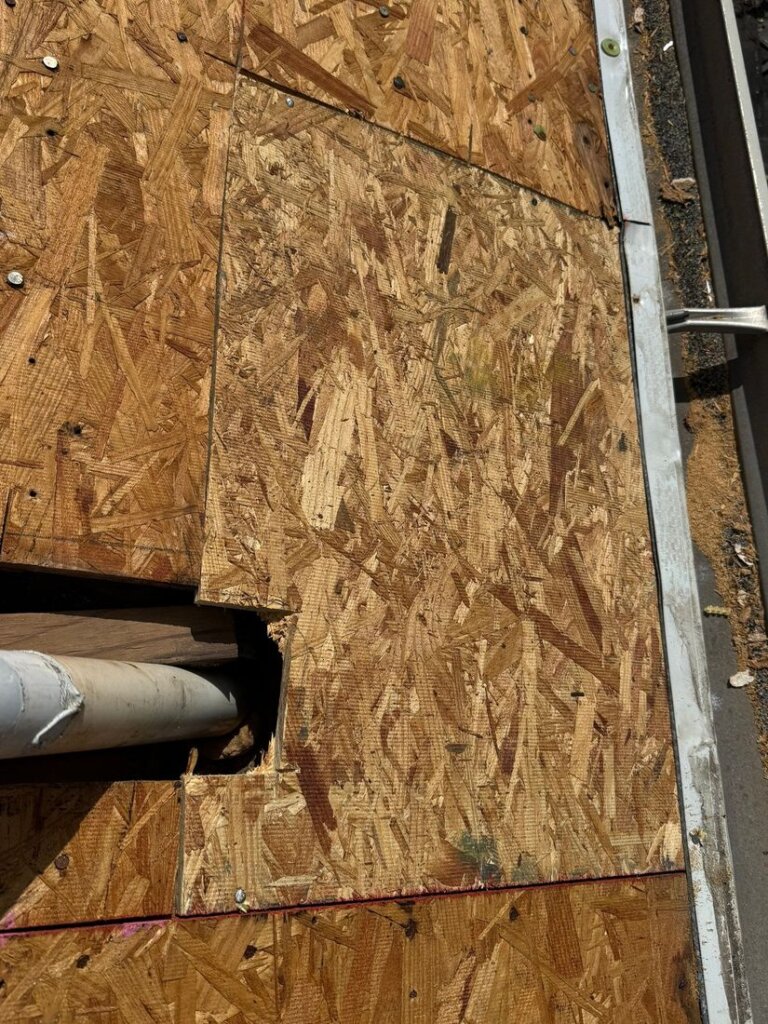
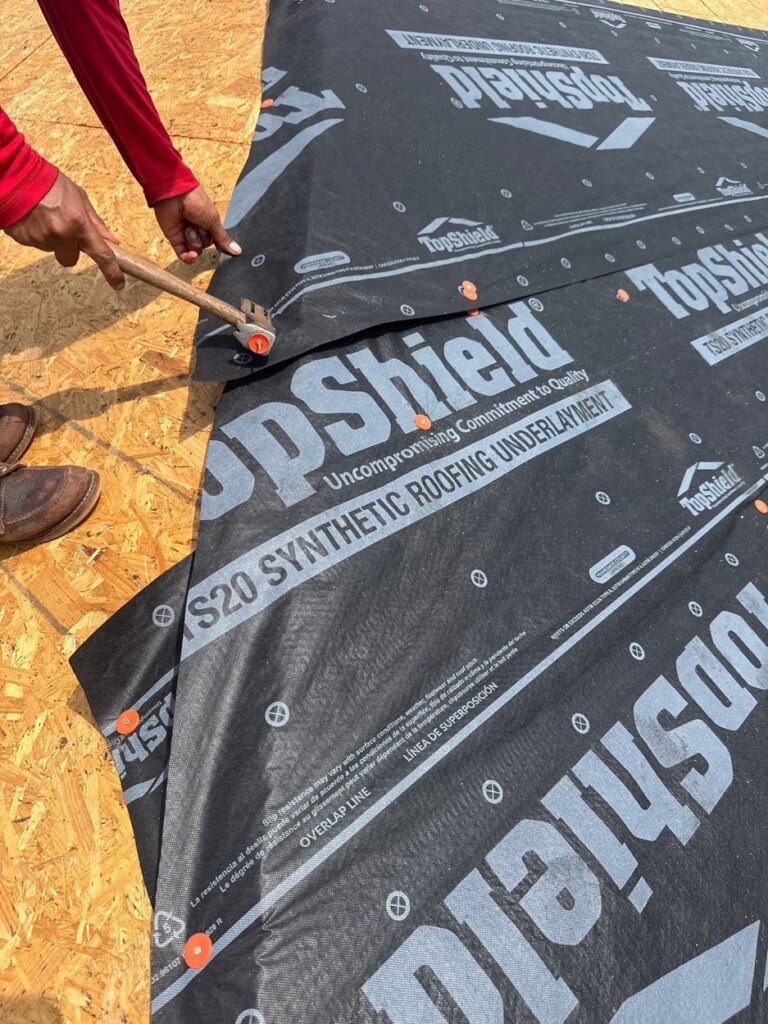
On a free inspection, we check the roof, attic and any leaks and give you photos, findings and your options. You’ll see what we saw, even if the answer is that the insurer got it right. Our storm damage team also meets adjusters on site when a claim goes forward.
Frequently asked questions
Can you appeal a denied roof claim in Texas?
Yes, in practice. Texas home policies don’t work like a court appeal, but you can tell the company why you disagree, send evidence and ask for a re-inspection. After that, your options include appraisal for disputes over the amount, a TDI complaint, a licensed public adjuster, or a lawsuit. Check your policy for its deadlines.
Can I file a claim again after a denial?
You can ask the insurer to reopen the same claim with new evidence, such as a roofer’s estimate or photos of damage the adjuster missed. A new storm is a new claim with its own date of loss. Don’t file a second claim for the same damage hoping for a different adjuster. Ask for a re-inspection instead.
Will a denied claim raise my insurance rates?
That depends on your company and your history, so ask your agent before you file anything further. Insurers can look at a home’s condition at renewal, and TDI says they may charge more or decline coverage if it’s in poor condition. Fixing known roof problems may help, whatever happens with the claim.
What if my insurer says my roof is too old?
Ask where the policy says so. Age alone is different from an exclusion. Some policies pay roofs at actual cash value, so an old roof may get a small payment or none after the deductible, as TDI’s example shows. Others may treat old damage as wear and tear. The letter should say which.
Can a roofer fight my denied claim for me?
No. Texas bars roofers from acting as public adjusters or negotiating your settlement. A roofer can inspect, photograph damage, write an estimate and discuss technical findings with the adjuster. If you want someone to negotiate, that has to be a licensed public adjuster or an attorney.
Get a second look at your roof
We’ll inspect your roof, attic and any leaks for free, photograph what we find, and tell you plainly whether the evidence supports another look at your claim. If it doesn’t, we’ll say so and walk through your repair options.
Sources
- Texas Department of Insurance: Why would my home insurance claim be denied or not paid?
- Texas Department of Insurance: Five things your home policy won’t cover
- Texas Department of Insurance: What if my insurance isn’t paying enough?
- Texas Department of Insurance: Home insurance guide
- Texas Department of Insurance: Homeowners and renters insurance complaints
- Texas Department of Insurance: Getting help with an insurance complaint
- Texas Department of Insurance: Insurance claim deadlines
- Texas Department of Insurance: Commissioner’s Bulletin B-0030-98 (form HO-145)
- Texas Department of Insurance: Metal roofs and home insurance
- Texas Department of Insurance: Replacement cost or actual cash value
- Texas Department of Insurance: Roofing and insurance, know the law
- Texas Legislature: Insurance Code chapter 542, Prompt Payment of Claims
- Texas Legislature: Insurance Code chapter 541, Unfair Methods of Competition and Unfair or Deceptive Acts
- Texas Legislature: Insurance Code chapter 542A, Certain Consumer Actions Related to Claims for Property Damage


